
A secret frozen in ice
In 1991, hikers in the Alps, near the border between Austria and Italy, made an extraordinary discovery in a glacier: a man who had lain in the ice for about 5,300 years, almost perfectly preserved. He was named Ötzi. Everything Ötzi owned came from the forest. His bow was made of yew, his dagger handle of ash, his cloak of woven grass and linden bast. His shoes were deer hide and his cap was bear fur. He also carried a copper axe and, it seems, he was struck by an arrow in the shoulder. But what fascinated researchers most was his little pouch, because it held two mushrooms.
Two mushrooms, two jobs
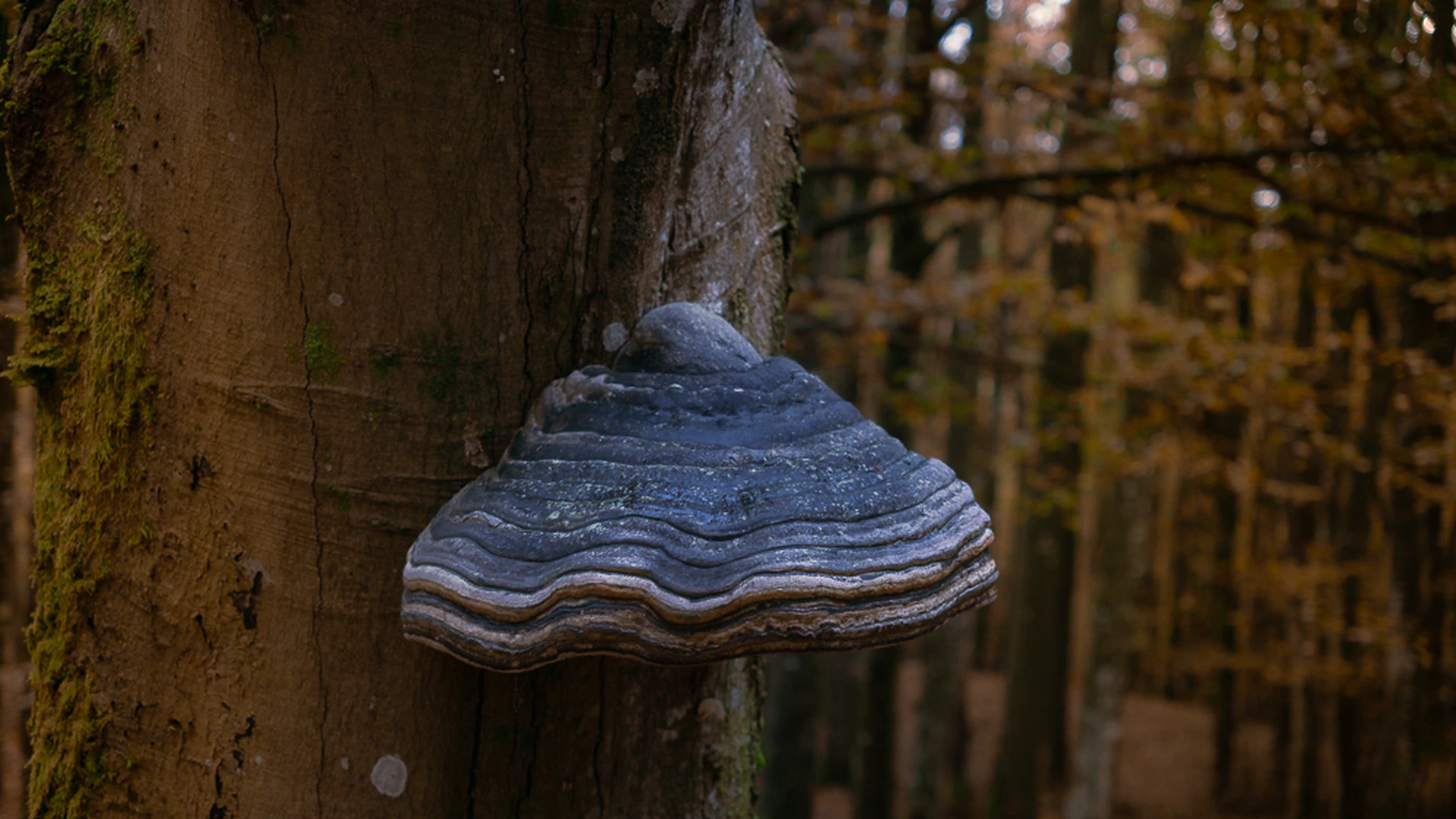
The first mushroom was for fire. In Ötzi's small pouch was a black, felt-like material that researchers identified as made from the tinder fungus (Fomes fomentarius). Flattened into a felt, this fungus can keep smouldering on very little heat, so people long used it to carry fire from one place to another. Ötzi's pouch also held small flint stones, so fire clearly mattered to him.
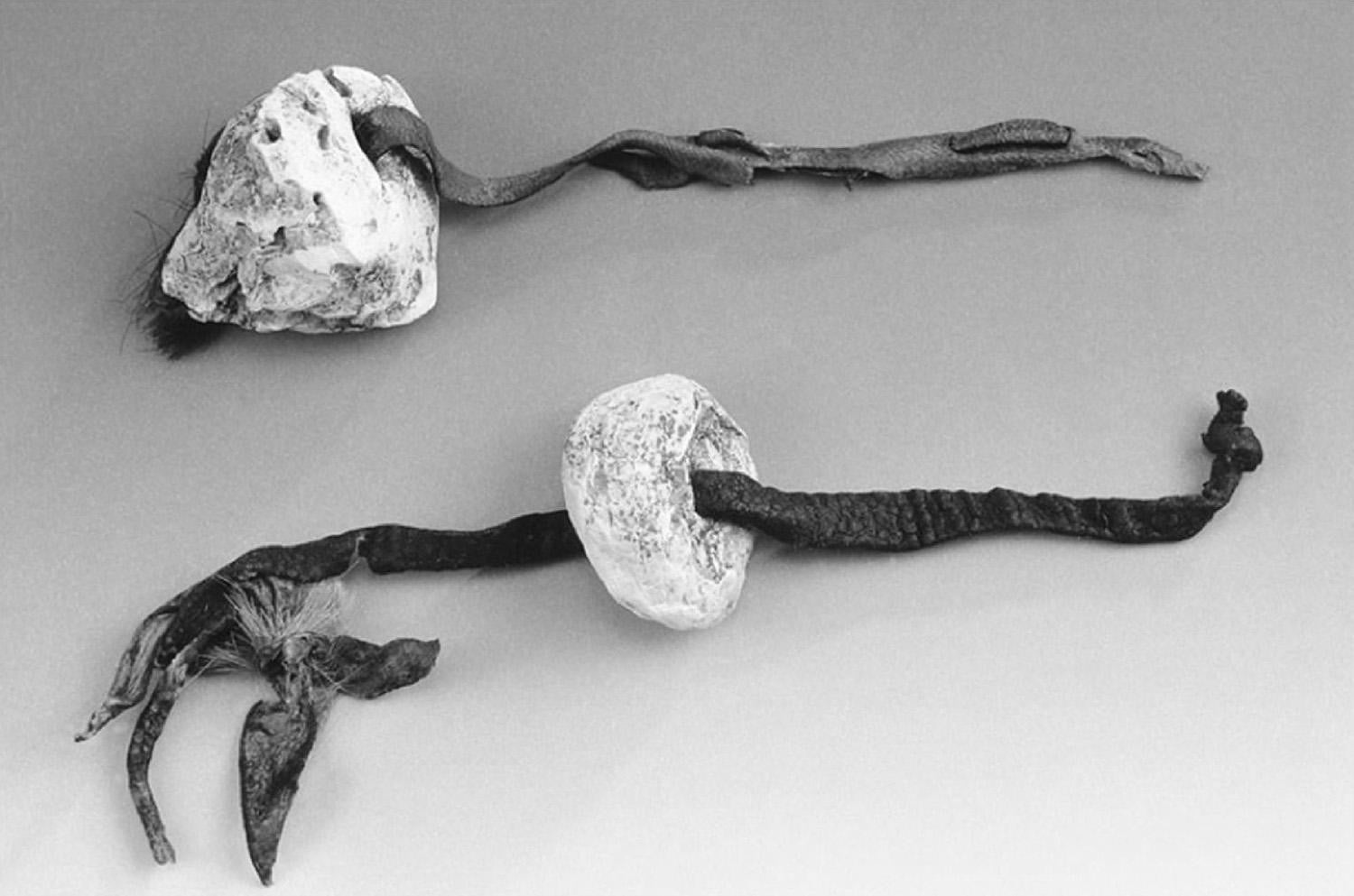
The second mushroom was more mysterious. On leather cords, Ötzi carried pieces of birch polypore (Fomitopsis betulina). Both fungi grow mainly on birch trees. Researchers think the pieces served a practical purpose: perhaps medicinal, perhaps as a kind of razor strop for sharpening blades.
Was it forest medicine?
Nobody can say for sure, but the idea is intriguing. Ötzi had intestinal parasites, and birch polypore was known in European folk medicine: people used it to ease pain, dress wounds and as an antiseptic. That is why some researchers think Ötzi's pouch looked less like a tinderbox and more like a tiny medicine kit. Some compounds in the fungus act against bacteria. Piptamine, for example, is the fungus's own defence against bacteria. It also contains beta-glucans, and in laboratory tests one of them sped up the movement of cells toward a wound. But let's be honest: we will never know for certain whether Ötzi used the fungus as medicine. What we do know is that its traditional use rests on real biological properties.
Old forest knowledge today
This story shows nicely that traditional knowledge often has a real basis. Ötzi's first mushroom, the tinder fungus, has had many uses. Hippocrates mentioned it for cauterising wounds, and later surgeons and dentists used it to stop bleeding. Some of its uses are completely unexpected:
• In western Siberia and on Japan's Hokkaido, the fungus was burned overnight to drive away evil spirits.
• It was pounded flat and made into caps and chest protectors.
• It served as a pincushion that kept needles and pins from rusting.
• Fly fishers still use it (it is called "amadou") to soak excess water from artificial flies.
Researchers point out that such traditions are often signposts that show us where to look. Kew's State of the World's Fungi report also stresses how little we yet know about the diversity of fungi. More than 5,000 years ago, a person walked through the forest with mushrooms in a pouch. Today, we are listening to the old knowledge of the forest again.
Sources
• Rowena Hill, Nature's first aid kit: A fungus growing on the side of birch trees, The Conversation, 2019
• Woodlands.co.uk, Neolithic mushrooms, 2019
• Tom Volk, Fomes fomentarius, the tinder polypore, University of Wisconsin-La Crosse, 2001
This text was written in our own words, based on these sources. It is a historical and popular-science overview, not medical advice.