1993: The girls who stunned the world
Stuttgart, 1993, the World Championships. Chinese runners, about whom almost nobody had heard before, took all three medals in the 5,000 metres, and gold and silver in the 10,000. A few weeks later in Beijing, 20-year-old Wang Junxia took off at such a pace that she ran the 10,000 metres in 29 minutes 31 seconds. No woman had ever run it that fast. For 23 years, nobody could catch that record. Everyone was asking the same thing: how?
The coach's answer: a caterpillar fungus
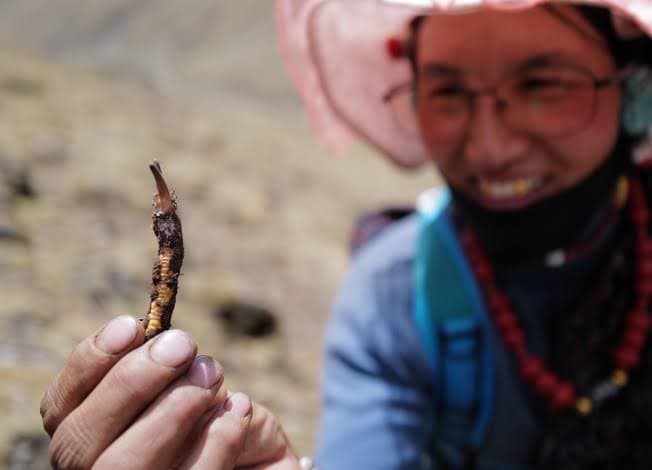
Their coach, Ma Junren, said something like this: altitude training in Tibet and a tonic made from a strange Tibetan fungus that grows on a caterpillar. Imagine the journalists' faces: a fungus that grows on a caterpillar? The story spread quickly through the world's media. Some didn't believe it: the then president of the international athletics federation said it was all just a show.
Yaks and herders
In Tibetan it is called "yartsa gunbu" . According to legend, Nepalese herders noticed that yaks grew more energetic after grazing in high mountain meadows. The herders found this fungus in the grass and tried it themselves. The first known mention of the fungus is in a 15th-century Tibetan text, which calls it the loveliest of all pleasures.
What happened next
The price went through the roof After 1993, demand for the fungus rose sharply. In Nepal, collectors were getting more than $25 a gram, and retail prices reached $150 a gram or more. It also became harder to find: where people once found 150 to 200 pieces a month, now they find 10 to 30. In Tibet's Autonomous Region, collecting it made up about 40% of rural cash income. Whether the fungus gave the runners their records, nobody has proved. But this story introduced one little-known fungus to the whole world. As demand grew, Chinese scientists learned to grow the fungus's mycelium in the laboratory. Today the market mostly offers this kind of fungus, or Cordyceps militaris grown on grain, while the wild Tibetan one is very rare and expensive.
Sources
• What Does Science Say About the Health Benefits of Cordyceps?, HowStuffWorks
• John R. Platt, Yarsagumba: Aphrodisiac Fungus Faces Extinction in Nepal, Scientific American
• IAAF to probe Chinese letter pointing to systematic doping by Ma, Reuters/SBS, 2016
• Sporting Controversies: Ma's Army, The Irish Times
• IAAF lets sport down, TimesLIVE, 2016
• Wang Junxia, Wikipedia
This text was written in our own words, based on these sources. It is a historical and popular-science overview, not medical advice.