Forest Tea from the Birch
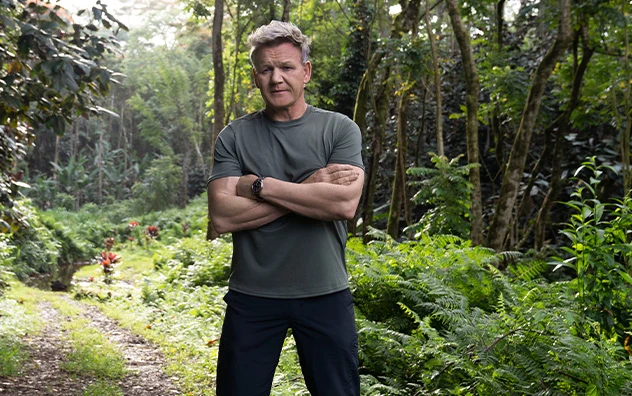
In 2021, the famous chef Gordon Ramsay went into the woods for a TV show, spotted a black, cracked lump on a birch tree, knocked it down and brewed tea from it. That lump is called chaga.
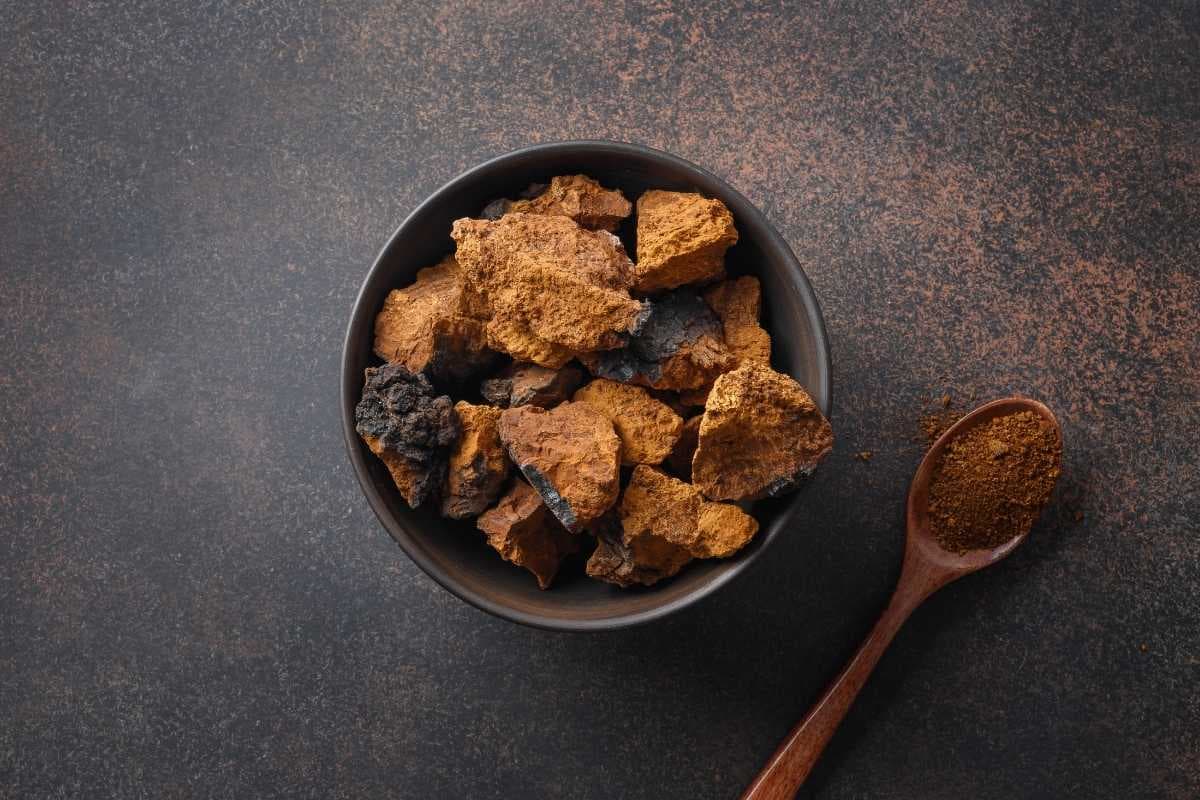
From the outside it looks like charcoal; inside it is streaked with orange, yellow and brown. Strictly speaking, it isn't a mushroom at all: it is a dense mass of the fungus (Inonotus obliquus) that grows slowly on birch trees. The true fruiting body appears only after the tree has died, and very rarely.
Chaga is special in taste too. Its tea is light, but deep: you can sense notes of forest and earth, a faint woody tone and a mild bitterness.
The Antioxidant Tournament
In 2007, Japanese scientists compared a hot-water extract of chaga with other well-known medicinal mushrooms. In tests of how well they neutralize free radicals, chaga won and outperformed all the others. In other studies, phenolic compounds were isolated from the chaga fruiting body. In one 2015 paper, one of them did better than some synthetic antioxidants.
What is an antioxidant, in simple terms
Free radicals are unstable particles that "rust" cells. Antioxidants are what neutralize them. In chaga, this role is mainly played by polyphenols, triterpenoids and melanin.
Why is chaga black?
Because of melanin. This fungus produces large amounts of melanin on its surface, and melanin is known for its antioxidant properties. In a 2005 study, chaga's polyphenol extract protected cell cultures from oxidative stress, while the polysaccharide extract did not.
Chaga in the Lab
Scientists are interested in chaga from many angles. Here are a few experiments that show its antioxidant nature:
• DNA protection (2004): Human lymphocytes were pretreated with chaga extract and then damaged with hydrogen peroxide. The extract reduced DNA damage by more than 40%.
• Cells of people with gut problems (2007): In lymphocytes from 20 people with inflammatory bowel disease and 20 healthy volunteers, chaga extract reduced damage by 54.9% in the patients' cells and by 34.9% in the healthy ones.
• Skin and ageing: Chaga protected human fibroblasts from damage and premature ageing caused by hydrogen peroxide. In mice, it reduced skin changes caused by ultraviolet light.
• Brain (mice, 2011): In a memory-impairment model, chaga extract lowered markers of oxidative stress in the brain and restored levels of glutathione and superoxide dismutase. The animals also did better in learning and memory tests.
• Antioxidant enzymes (mice, 2017): In a diabetes model, chaga polysaccharides restored levels of superoxide dismutase, catalase and glutathione peroxidase.
• Gut (mice, 2023): In a colitis model, a chaga polysaccharide increased the activity of an antioxidant enzyme and lowered an oxidation marker.
• Liver (rats): Chaga melanin reduced signs of liver damage.
The big picture
A 2021 review says chaga's antioxidant properties have been confirmed many times in cell and animal models. At that time, experiments on human participants had not yet been carried out, which means chaga is, for now, a hero of the laboratory.
Chaga as a Superfood
"Superfood" is not a scientific term. It is what people call foods that stand out for their many useful substances. That is how chaga is known today: it is made into tea, powder and coffee blends. David Wolfe's 2012 book Chaga: King of the Medicinal Mushrooms is credited with starting today's chaga boom.
Why chaga earned the name
• Lots of phenols: In one study, chaga's total phenol content was about six times higher than in other common fresh edible mushrooms.
• Strong antioxidant activity: As we saw above, in the 2007 comparison chaga did very well against other medicinal mushrooms.
• Old tradition: The Khanty of Siberia have used it since the 16th century.
• Slow growth: Chaga grows on a birch for years, which is why good chaga is a precious product, not a fast-production one.
Not all chaga is the same
A 2026 study compared six commercial chaga products (powder, tea, tablets, capsules, drops and tincture). Antioxidant activity and phenol content differed greatly depending on the product's form and processing method.
So when choosing chaga, it matters how it was prepared, not just what name it is sold under.
One practical note
Chaga contains oxalates. One medical report describes a person who took 10–15 grams of chaga powder a day for 3 months and developed a kidney problem. So people with kidney problems, and those taking blood thinners, should take chaga only in agreement with their doctor.
Sources
• Nakajima et al., Antioxidant small phenolic ingredients in Inonotus obliquus (Chaga), Chemical and Pharmaceutical Bulletin, 2007
• Cui et al., Antioxidant effect of Inonotus obliquus, Journal of Ethnopharmacology, 2005
• Phenolic antioxidants from the I. obliquus fruiting body, The Journal of Antibiotics, 2015
• Park et al., Chaga mushroom extract inhibits oxidative DNA damage in human lymphocytes, BioFactors, 2004
• Najafzadeh et al., Chaga mushroom extract inhibits oxidative DNA damage in lymphocytes of patients with inflammatory bowel disease, BioFactors, 2007
• Cytoprotective effects of Inonotus obliquus against oxidative stress in human fibroblasts, PubMed
• Amelioration of scopolamine induced cognitive dysfunction and oxidative stress by Inonotus obliquus, Food & Function, 2011
• Wang et al., Antidiabetic activities of polysaccharides separated from Inonotus obliquus via the modulation of oxidative stress, PLoS ONE, 2017
• Polysaccharide from fermented mycelium of Inonotus obliquus attenuates ulcerative colitis in mice, Microbial Pathogenesis, 2023
• Parfenov et al., Hepatoprotective Effect of Inonotus obliquus Melanins
• Szychowski et al., Inonotus obliquus – from folk medicine to clinical use, Journal of Traditional and Complementary Medicine, 2021
• Chaga mushroom-induced oxalate nephropathy: a case report, Medicine, 2022
• Zheng et al., Chemical diversity of biologically active metabolites in the sclerotia of Inonotus obliquus, Applied Microbiology and Biotechnology, 2010
• Jonathan Robins, Picking Stories, Selling Chaga, NiCHE, 2023
• Elizaveta Mitrofanova, Cancer of the Birch Tree, Potash Hill, 2014
• Yingxuan Fan, Comparison of the phenolic components and their antioxidant activities in five common edible mushroom species in Manitoba, University of Manitoba thesis
• Wróblewska et al., Analysis of the antioxidant potential of dietary supplements with chaga mushroom, Farmacja Polska, 2026
This text was written in our own words, based on these sources. It is a historical and popular-science overview, not medical advice.